Showing posts with label Investments. Show all posts

Saturday, July 19, 2008

Q & A with your Chicago Real Estate Expert

A loyal reader writes and asks:

Brokers, have you ever bought a property (as an investment, to rehab and flip) for yourself from someone who came to list with you or company you work for?  Do you consider yourself to be to an advantage then others, since you get to it first? Is it fair, ethical and legal? If a client comes in to list their property and you want to buy it from them, who interested are you looking out for? Or if you don't buy it for yourself, did you have a preferred buyer who was counting on you to notify them of hot properties?

Here in Illinois, according to my Real Estate Broker Class Instructor at the Real Estate Education Company, it is ILLEGAL to buy your own listing.  A conflict of interest is created that Illinois License Law will not accommodate any resolution of this conflict.

So, Realtors, if you want to buy a piece of property that you go and see on a listing presentation, it is imperative under the law that you decide whether you want to try to purchase this property before taking the listing.  In fact, during the listing presentation process, it is frequently customary for a seller and the prospective agent to discuss the situation that has brought about the sale.  It can be interpreted under Illinois License Law that the use of this information by the agent in negotiating on the home would also be illegal.

Of course, I am always out there looking for prospective properties to purchase.  Lots of agents do this.  But my first source of property information is usually the Multiple Listing Service (MLS) and then popular websites that contain lots of For Sale By Owners (FSBO's.)

It's best to wear only one hat when out conducting business.  When I am on a listing appointment, I am wearing the hat of Marketing Specialist and Real Estate Agent for my company. 

When I am looking at investment properties, I make my phone calls and I introduce myself as a prospective buyer WHO ALSO IS A REAL ESTATE AGENT.  It's best to let people know right away that you are a Realtor when calling on properties that you might be interested in buying.  I have been in court accompanying other close friends who were sued for not disclosing that they were Real Estate Agents at the first point of contact, even though Illinois License Law states that you must list your licensee status on a contract on a piece of property.

And yes, if I go out and list a property that is perfect for one of my clients, I usually call them from the car in front of the house as I leave with the signed listing agreement.  I think that's good service to both the seller and the buyer.

Thursday, April 3, 2008

Canary in the Coal Mine? Foreclosures in the news

While Chicago is not suffering the mortgage crisis as painfully as residents of the Coasts, Florida and Las Vegas, more and more foreclosure news has been creeping into the news lately. 

A roundup of foreclosures in the news in the last month:

March 3 Crain's Chicago Business

Foreclosure flu spreads:  14,250 foreclosures in 2007, a 46% increase over 2006. 

Northwest Side neighborhoods like Albany Park, Logan Square and Portage park saw their numbers more than double, according to a new report provided to Crain's ahead of it's scheduled release.

Those areas drew newcomers in large numbers in recent years as first-time buyers sought affordable alternatives to pricier city neighborhoods like Lincoln Park, Lincoln Square and Lakeview.

Tower builder tie-up: Related Companies and Magellan discuss a combo as two major projects falter.

Talks to combine two of the Chicago area's largest developers come at a critical time for Related Midwest LLC.  The luxury condominium developer is struggling with a slow sales start at its two newest projects and has been without a president.

Related Midwest LLC developments include:

  • 340 on the Park - already completed
  • Canyon Ranch Living - planning
  • Pestigo - Planning
  • Roosevelt Square - Under construction

Magellan Development is currently building several high rises at Lakeshore East on the New East Side.

Decline seen in apartment sales

Sales of Chicago-area apartment buildings could drop 30% this year, to $1.08 billion, from a record breaking 2007,  according to a report from CB Richard Ellis, Inc.

Signs of the slowdown were evident late last year, a time when sales activity typically spikes as investors hurry to complete deals before yearend.  But only 42% of the Chicago deals close din the second half of last year, as opposed to 69% in the last 6 months of 2005, the previous record year when sales totaled $1.89-billion.

March 10 Crain's Chicago Business

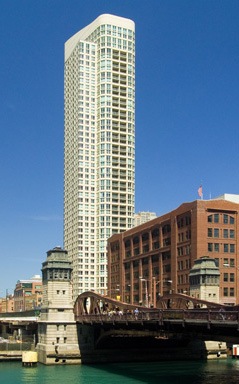
TheSterling A Sterling example of condo Bust:  Foreclosures, falling prices: a bad omen?

Over the past three years, lenders have filed 95 foreclosure suits, accounting for about $40-million in loans, on condominiums in the 389-unit high-rise, fueling a big drop in condo values throughout the building.

The tower represents a worst-case scenario in a downtown condo market that is weak but so far hasn't seen the falling prices and rising foreclosures that have afflicted once-hot markets like South Florida.  The real test for condo owners will come over the next two years, when downtown developers are expected to complete more than 10,000 condo's, an unprecedented jump in supply.

A nice building in a superior location seems an unlikely victim of rampant foreclosures, but artificially propped up prices along with developer incentives may have played a part in its unfortunate predicament.

American Invsco Corp attracted a lot of investors with incentives such as two years of free taxes, two years of free assessments, and artificially propped up cash flow.  One incentive offered to make up the difference between the rent and the mortgage + tax + assessment payments for a two year period. 

It was too good to be true for some buyers.  As the incentives wore off, many buyers saw their monthly payments soar to unsustainable levels.

A trickle of foreclosures in 2004 grew to a flood in the next three years.  Nearly 1/3 of foreclosures involve owners with multiple units in the building.

An American Invsco spokesman blames the Sterling's troubles on the depressed market:  "It has nothing to do with our program."

In more stable neighborhoods where the inventory supply is more limited and there is not as much speculation, the number of foreclosure epidemic seems quite limited.  In the Lakeview neighborhood, for example, only had 126 foreclosures, but this represented a 94% increase from 2006. 

It's interesting to watch the tale of two cities developing right inside the borders of Chicago.

Brand New Duplex? Or Turn of the Century House?

A customer recently posed the question:  Should I buy a new duplex-up or a turn-of-the-century SFH?  I'm looking to buy in the Chicago near north area. Both are similarly sized and in good condition, just built a century apart. Which will have better appreciation/resale?

2032 Racine ext1

It's such an interesting question because usually the same buyer would never be considering both at the same time. 

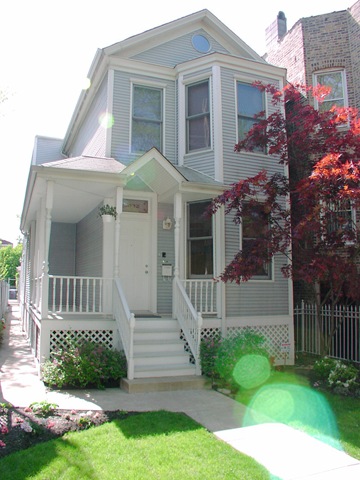
Here in Chicago, the history of the popular neighborhoods is such that they began their lives as working class neighborhoods filled with modest homes that do not lend themselves to modern living.  In the photograph above, this Victorian was the original farm house for the township built in 1889.  Despite its obvious charm, the inside layout was a jumbled mess of rooms that did not make any sense.  The basement was not accessible from inside the house.  Bedrooms were scattered throughout both levels of the home.  Some rooms were long and narrow, others did not have closets.

We were the third listing agents to try to sell this property, and after several months of reaching out to neighborhood residents who might enjoy this superior location in Lincoln Park, we pitched the property to a developer.  The lot was extra long, extra wide, and the zoning was generous (R4) to allow a large condo building to be built.

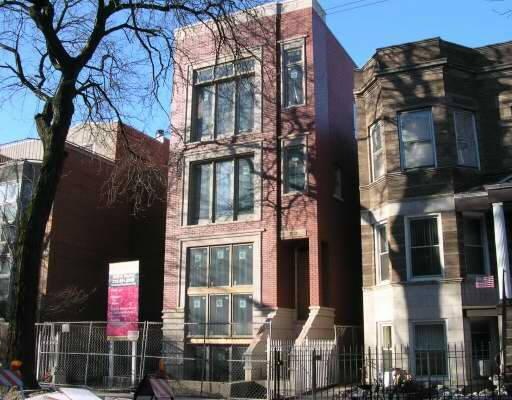
2032 Racine Condo

We sold the house to the developer for $700,000.  When the condominiums were completed, the developer's agent sold the largest condo - the duplex on the first floor - for $741,000.  This was in 2005.

In 2006, the same condo sold again for $818,000.

I suppose that says volumes about the popularity of condominiums, and of the duplex floor plans.

Based on this anecdotal evidence (as well as a bunch of experience) our advice would be to only purchase the single family house if it's a very good value and is sitting on a parcel of land that a developer would be very interested in when you're ready to sell. 

Otherwise, the popularity and salability of new condominiums can't be beat.

Saturday, March 15, 2008

Series: Getting started with Chicago Investment Property. Part 4

Part 4 – Move-in Day.

Once the unit is prepped and ready for move-in, several things should occur before you hand over the keys.

If any forms are left to be signed, get them signed before you hand over the keys.

If any balance remains to be paid – get it now, before you waste time on any inspection. Once you hand over the keys, you sole recourse is eviction if any balance remains unpaid. Eviction is expensive.

Walk through the unit with the renter with camera and move-in inspection sheet in hand and note the condition of the unit. Have the renter fill out the inspection sheet in their own had writing and accept the condition of the unit. Put in writing anything you agree to fix and if you don’t want to fix something, put that in writing also. They don’t get the keys until you are both on the same sheet of music.

Take pictures of every room, every wall, every floor, every cabinet, every window, every door, everything. Media storage is cheap, take pictures of everything. You do this on the day of move-in because your camera will encode the picture with a date stamp. This could protect you down the road.

This sounds simple, but…verify the keys work – have the renter test them in front of you.

Once all paperwork is signed, all monies paid, the inspection is complete and acknowledged by signature of everyone, you can now hand over the keys. Now you should get out of there before you get roped into helping move boxes.

Sometimes the lease will say that it starts on the first but your tenants will want to move in a few days early if the unit is vacant to take advantage of a weekend. No problem, but they do have to pay prorated rent for the days they have possession. No pay, no move in early.

The renters now have assumed possession of the unit. Their rights, and your responsibilities, have just changed dramatically. That is why we made sure we took care of everything and got paid before handing over the keys.

Guide to articles

Part 1: Identifying potential property
Part 2: Marketing
Part 3: Taking an application and lease
Part 4: Move in day

Friday, March 7, 2008

Series: Getting started with Chicago Investment Property. Part 3

Taking an application and lease

Personally, when I take a lease application, I require all the paperwork, and all the money, paid up front.

There are several musts when someone rents your apartment:

1. They fill out a credit application – completely (no blanks).

2. They pay a credit check fee. Check with your credit reporting bureau to see what this fee is. Have the tenant pay the credit check fee in a separate check either to you or to your credit bureau depending on your arrangement. No, you will not take a credit report from someplace else. These are too easily faked.

3. They fill out the lease.

4. They pay the first month’s rent. This must be a separate check.

5. They pay the security deposit. This must be a separate check. In Chicago, the law requires it be a separate check.

6. You must give a receipt for every check you receive. Some receipt books have check boxes so one page serves as a receipt for all three. Some receipt books do not and you’ll have to write three separate receipts. In Chicago, the law requires that the security deposit receipt contains: 1) description of the dwelling unit (property address), 2) the amount received, 3) the date received, 4) the name of the person who received the deposit and, 5) the signature of the person who received the deposit. Big troubles to those who don’t follow this simple rule.

Some possible exceptions:

You might let the tenant pay their rent on the day they move in. Personally, I would not. I want their checks to have plenty of time to clear. If a tenant is scheduled to move into my apartment sooner than one week from application, then I require certified funds.

This should go without saying: do NOT fall for a Cragslist style scam whereby you receive a certified check in the mail, and the tenant tells you he made a mistake and that you should cash his check and return the overage by mail. You can kiss your bank account goodbye if this happens.

Other things to consider:

If your rental is a condo, does the building have move-in/move-out fees or deposits? Find out and make sure that the renter knows it is their cost to absorb. Get this info and inform them upfront at the application stage or it could cause some bad animosity later.

Lease Terms
Get the appropriate lease for your unit type. You will want to look for one of these:
@ Standard Chicago Apartment Lease
@ Chicago Apartment Lease – Furnished
@ Condominium Lease – or a standard lease that contains language appropriate to condominiums

You can get the Standard Chicago Apartment Lease at Tanenbaum Hardware on Belmont. The others, we may have.

The Standard Chicago Apartment Lease is the easiest to use (but not appropriate for condominiums) because it covers all the legal stuff required in Chicago.

If you don’t use the Standard Chicago Apartment Lease, you must add a rider that contains the following information:
@ The Chicago Landlord Tenant Ordinance applies to the lease. Tenant acknowledges receiving a copy of the summary of the ordinance.
@ Tenant acknowledges receiving a copy of the rules and regulations of your building, or of the condominium building the unit is located within.
@ The interest rate paid on the security deposit.
@ Rent is due on the First of the month. It shall be considered late if not received on the first. Even though late fees cannot be collected until after the 5th.
@ The late fee: The monthly rent shall be automatically increased $10, plus 5% of the amount by which the monthly rent exceeds $500, as additional rent, if received by Lessor after the 5th of the month for which it is due.
@ Tenant acknowledges receiving a Lead Disclosure statement and the pamphlet “Protect your Family from Lead in your Home.”
@ Tenant acknowledges receiving a Heating Cost Disclosure – or a statement that the heat is included in the rent and therefore a Heating Cost Disclosure is not provided.

Additional Resources:
Lead paint disclosure: www.epa.gov/lead
Chicago Landlord Tenant Ordinance: http://www.egov.cityofchicago.org/

Guide to articles

Part 1: Identifying potential property
Part 2: Marketing
Part 3: Taking an application and lease
Part 4: Move in day

Monday, February 25, 2008

Series: Getting started with Chicago Investment Property. Part 2

Part 2: Marketing

These steps might be a bit simplistic for a larger property owner, but using these tools and implementing this plan has served property owners with as many as 20 units in their portfolio.

If you own several multi-unit buildings with several dozen or more apartments, you’ll probably want to simply hire an apartment finding service to handle your marketing.

Get a Gmail email account

For marketing, you probably don’t want to expose your personal, or your business email address to the public. Also, after you have a tenant, you might simply decide to only give them your Gmail address, but have a system in place that either (a) forwards it to your regular email or (b) you diligently check it.

Get a Postlets account

Go to http://www.postlets.com/. Here you can generate an attractive web page for your rental with a thorough description and photographs. You’ll be given the HTML code you can drop into other websites you choose to advertise on.

Get a Craigslist account

You can easily market your apartments yourself using Craigslist and not have to spend a penny on advertising. Seriously – nothing else.

Go to http://www.chicago.craigslist.org/ and set up an account. Having an account makes it easier to review ads you have already posted, delete them, and update them.

Showings

When you’re fielding phone calls, the volume of requests can be overwhelming at times. It’s perfectly acceptable to encourage prospective renters to come to view the property when you intend to hang out for a couple of hours. For example, Friday evening for 1 hour, Saturday morning from 10 to Noon, or a similar schedule for the afternoon or on Sunday. Don’t worry if a prospect complains that they can’t make your showings. You’re simply interested in moving as many people through the apartment as possible in the most convenient period of time.

If you are not going to take pets, feel free to be firm when turning down prospects on the phone. Say “Sorry, no thanks.” Or even better “Sorry. This building doesn’t allow pets.” And if they persist, you can be slightly less friendly while pointing out that your ad clearly indicated No Pets and that you resent having your time wasted.

Guide to articles

Part 1: Identifying potential property
Part 2: Marketing
Part 3: Taking an application and lease
Part 4: Move in day

Sunday, February 17, 2008

Series: Getting started with Chicago Investment Property. Part 1

A client purchased her first investment condominium this week. Besides helping her as her identify and purchase her property, I will be getting her started on her way becoming a responsible landlord. Since I have to create these materials on her behalf, I though the topic would make a great series of blog posts.

Phase 1: Identifying your potential investment property.

Get together with your real estate pro. May I suggest ->me<-? You should have a lengthy discussion about kinds of properties, goals and objectives, and finally your finances.

Kinds of properties: Would you like to own a two, three or four flat? Will you live in it? Would you prefer a condominium? Do you want one that you can fix up and sell for a profit? Or one that's already in good condition? Or do you want to find a larger building with six, a dozen, or even more units?

Goals and objectives: Will you buy and hold? Or buy, fix and flip? Are you betting on appreciation? Or do you need the property to cash flow? Do you need to shelter other income?

Finances: How much money are you putting down? Have you spoken to a bank yet? Do you know what interest rates are on investments? Are you aware of making exchanges? How's your insurance? What's your tolerance for risk?

After answering all these questions, you should then begin looking. This step can take a day or many months depending on your unique needs. I have a great checklist of steps to take in order to get comfortable selecting a property and making an offer. It's several pages - too much to share here. Give a call if you'd like to receive this; it's part of my investment handbook.

After you identify your desired property, you'll write a contract on it. You'll negotiate out your terms and your price, and if you're successful, you'll be under contract. But the process isn't over yet.

Take the time to do your discovery, or due diligence. For a condominium, you'll be given all the condominium documents. For a multi-unit building, you'll be given copies of all the leases, reports about expenses and copies of some of the bills.

Another part of your due diligence is to have an inspection.

If this all goes well, you'll be well on your way to closing on your investment property. Your attorney will handle most of the details and you'll be given instructions on when and where to go for closing, and how much more money to bring.

Before Phase 1 ends, however, it's wise to begin implementing Phase 2: Marketing your condominium or apartments for rent. Stay tuned for tomorrow's installment.

Guide to articles

Part 1: Identifying potential property
Part 2: Marketing
Part 3: Taking an application and lease
Part 4: Move in day

Thursday, February 14, 2008

Expert Advice from our property manager - Steve West

A regular reader asked a question via a comment post on an earlier entry, but I thought the topic was so interesting that I felt it deserved its own post.

Can a condo association require a separate security deposit for renters? My building has six units. In our house rules, it states that only one condo at a time can be rented out. It also states that a security deposit equal to one month's rent must be given to the condo association. Is this legal? I doubt that I am going to get any renter to give me an amount equal to two months rent (one for me, one for the association.) Thanks.


Our resident property management expert, Steve West, from Evolution Real Estate replied:


First let me do the disclaimer - I am not a lawyer and what I'm about to say is based on my years of management experience and not intended as legal advice.


Now to your question: It is my understanding after having asked several lawyers over the years questions very similar to this that the practice of treating Renters (or owners who rent) different from all other owners is illegal. The basic jist is that an association can not create "separate classes of ownership" (ie - one set of rules, regs & fees for resident owners and a different set for investment owners).


However, if you association charges a deposit for ALL owners regardless of status, they might be able to get away with it.


I'd question your board. If they insist, you should suggest to them that before they try to enforce it, they should run it past the association's attorney in order to save themselves some expensive problems.

Monday, February 11, 2008

Dumped by Trump II - local publisher sues the Donald

We previously reported that Donald Trump had been canceling contracts at Trump Tower for "Friends and Family" during pre-construction sales.

The Chicago Sun Times and Crain's Chicago Business are reporting that former Chicago Sun Times publisher David Radler is suing Trump for refusing to sell him a condo in the new Trump International Hotel & Tower for a discount.

Not the most clever move in the current real estate climate, no?

Chicago buyers feeling the pain of Chicago's new Transfer Tax

Check out the great article in the Tribune over the weekend on the impact of the new Transfer tax on Chicago homebuyers.


My favorite quote from a potential homebuyer whose transfer tax will INCREASE by $7,000.


Hopefully, by November, when I close, they will have figured out that sellers should also contribute -- but I am a seller, too, so I am going to get hurt either way.


The thing that still gets me: what does bailing out the pension system of the CTA have to do with Real Estate? Of course, the real answer is that this tax affects so few people in any given year, it was simple for the legislature to shift this tax onto them as they're not an organized voting block. I hope Chicago Aldedrmen remember that although Chicago home sellers are not an organized voting lobby, the Chicago, the Illinois and the National Associations of Realtors are.

Monday, January 21, 2008

Buying an investment property, should you form an LLC?

A reader writes and asks:


My wife, My brother, and I are considering purchasing a multi-unit property to rehab and rent. Should we form an LLC? On the same topic, we will all be cosigning on the loan. Given current market conditions, is there any hope that we can go bigger and only put 10-15% down?


It sounds like a good idea, doesn't it? The Limited Liability Company will indeed protect you from liability - which is always a good thing when owning property that tenants occupy. Liability from lawsuits brought against you would be limited to the value of just that one property - not your total net worth. A definite plus if you own more than a handful of properties. But the LLC presents a few obstacles, too, which can be difficult to overcome.


If you take ownership of your property in an LLC, financing will almost certainly need to be commercial financing. This may mean stringent credit requirements, higher interest rates and at least a 25% downpayment. On the other hand, if you purchase a 2 to 4 unit building in Chicago, and one of you is willing to live in one of the apartments (at least temporarily) you may qualify for conventional financing with lower down payment requirements and interest rates that are customary for home buyers.


In the situation described above, with family members purchasing a smaller investment property together, your interests can probably be protected with much simpler solutions.


Probably the smartest way to go would be to purchase the property as either joint tenants or as tenants in common (depending on how you want the property to transfer if one of you were to pass away) without all the complicated hassles of forming a corporation. Then, take out an insurance policy on the property to cover its damage and destruction for replacement value, and a liability policy for $1-million. Do this for each building you purchase.


Then, add an umbrella policy that covers additional liability against accidents or negligence by you, your employees and your contractors in the amount of another $1-million or more - depending on how much of your net worth you need to protect. The umbrella policy that covers these situations also covers your liability against unforeseen situations that may not even have anything to do with your real estate investments. The best part is that these umbrella policies are usually extremely affordable.


The umbrella policy that covers both Steve and myself for an additional $1-million in liability only costs $200 a year - an outstanding bargain.


Give me a call if you would like to speak with our Allstate Insurance agent here in Chicago about checking out these options for yourself.

Wednesday, February 21, 2007

Costa Rica Real Estate


We couldn't resist looking at some Costa Rican real estate. The photo above is for a 50 bed hostel plus separate owners' house in Heredia. Heredia is a half-hour outside of the Costa Rican capital of San Jose. The climate around San Jose is more moderate - not so hot in the summer / rainy season. The property is listed for $349,000 (U.S. Dollars) which we think is quite reasonable.


We may not be long for Chicago...