Showing posts with label Guides. Show all posts

Friday, April 18, 2008

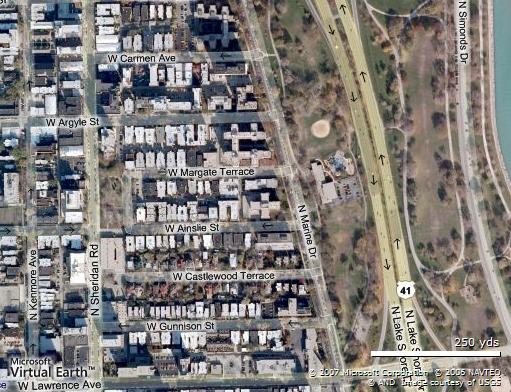
Where in Chicago is Margate Park?

Map image

Conveniently located on the shores of Lake Michigan, comfortably within one day's carriage ride from the movie studios located in the South Loop you'll find this tranquil paradise far removed from the hectic city. 

That's how this popular destination was billed to the movie stars and studio moguls of Chicago during the early 1900's.

Today this popular neighborhood lies along the lakefront and Marine Drive stretching from Lawrence to Foster Avenues.  Out of character for traditional Chicago neighborhoods, some streets such as West Castlewood Terrace feature oversized lots with luxurious mansions built during the heyday of Chicago's Silent Film era.

Blog 4-16-08 027

Charlie Chaplin, Gloria Swanson and other early film stars are rumored to have owned homes or visited the gracious mansions in the neighborhood and relaxed along the dunes in what is now a part of Lincoln Park.

Blog 4-16-08 029

Not every street in Margate Park is as luxurious as this, but even the more traditional streets such as Ainslie and Margate Terrace are tranquil oasis' in an otherwise bustling neighborhood.  Most streets don't go all the way from Marine to Sheridan or Broadway, rather dead end.  The apartment buildings lining these streets featured units with gracious flowing floor plans of exceptional size. 

 Blog 4-16-08 032

Still a hidden gem in Chicago, selecting a condo in Margate Park can be quite  a treasure.  Still priced affordably, it's possible to locate  a sprawling 1,700 square foot two or three bedroom condo priced in the low $300,000 range featuring vintage details such as exposed woodwork, exposed wood trim, wood floors and lots of charming rooms.

Thursday, March 27, 2008

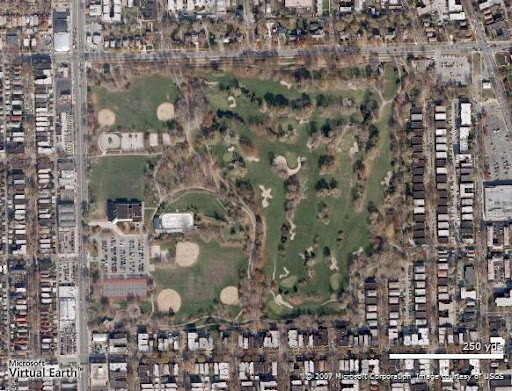
Warren Park in Rogers Park

Warren Park in West Ridge/West Rogers Park

With nearly 90 acres of parkland, Warren Park is the North Region’s largest park featuring a number of special attractions for every season of the year. In April, a state-of-the-art skate park and six station baseball batting cages open to the public. The 80-by-80 foot skate park, situated to the north of the fieldhouse, contains the same equipment used by pros, including quarter pipes, pyramid combinations, street spines, launches, grind rails and fun boxes. Admission fee is $2 and is intended for skateboarders and in-line skaters only. Step up to the plate and test your batting skills at the batting cages. At the nine-station cage, choose from a variety of speeds that range from 40 to 70 mph and select either baseball or softball (12-inch) styles of play. The batting cages cost $1 for 15 pitches. Weathering permitting, the cages are open April - September. The hours of operation are Monday, Closed; Tuesday - Friday, 4 - 8 pm; and Saturday and Sunday, 11 am - 5pm. Bring your own bat.

Fitness enthusiasts can hop onto a paved path that winds throughout the park for walking, jogging or biking. Golf-lovers head to the Robert A. Black nine-hole golf course and golf putting practice area located on the northeast end of the park. Warren also boasts a racquetball court open for play on weekdays, 10 am - 7 pm for $6 per person.

In the winter months, Warren Park boasts an outdoor ice rink for skating, as well as a sled hill for all ages. This winter, the ice rink will operate (weather permitting) until March 16, 2008.

Warren Park’s programming ranges from aerobics to unique West African drum classes. For youth and teens, the park has strong after-school program (Park Kids), baseball, basketball and soccer programs. The site is also home to the North Region’s administrative offices.

History

Warren Park was created in the 1970s, born of both conflict and cooperation. The controversy began in 1965 when real estate developers purchased the former Edgewater Golf Club. Shortly thereafter, a coalition of community groups started a campaign to save the land as open space. Despite the strong community objection, however, the site was re-zoned to allow development of high-rise apartments and a large shopping center.

The State of Illinois forcefully intervened in 1970, acquiring a portion of the property to create the first-ever state park within the boundaries of Chicago. Plans to develop the remaining acreage continued, and community opposition stayed strong. In 1972, the Chicago Park District determined to purchase this land. The state transferred its property to the park district in 1975. By that time, the park had been named in honor of Laurence C. Warren (---), an attorney and leading community activist who helped save the open space as parkland. In 1980, Warren Park's nine-hole golf course was officially dedicated in honor of Robert A. Black (---), Chief Engineer to the Chicago Park District for more than thirty years.

Saturday, March 22, 2008

Tour: Lincoln Park Zoo in Winter (really Spring)

I helped out some clients today with renting out their investment condo, and since they brought the whole family in from the suburbs, and the condo is located near the Lincoln Park Zoo, I couldn't resist dragging the family over to the new Children's Park inside the Zoo.

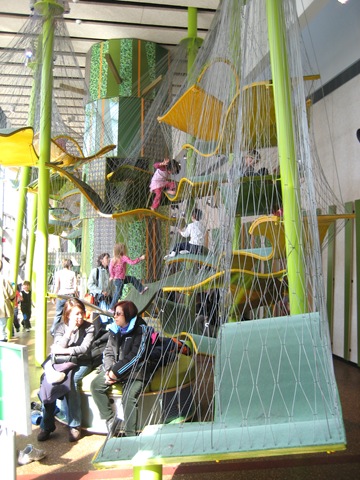
LP Zoo March 009

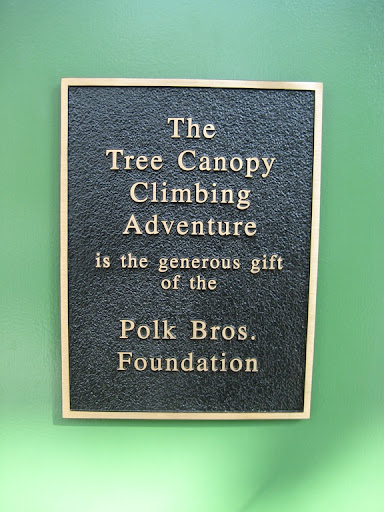
The new Tree Canopy Climbing Adventure can be found just south of the Sea Lion pool inside the main gate to the zoo.  This thing is amazing.  Where were play parks like this when I was a kid? 

LP Zoo March 008

The multi-level environment is filled with exhibits featuring animals found in jungle canopy trees. 

LP Zoo March 006

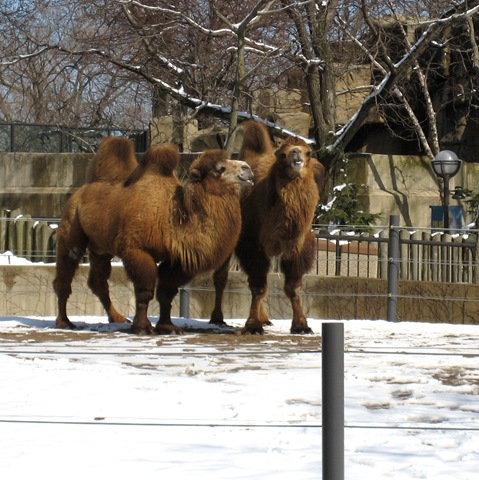
Outside, other animals seemed to be making do in the early Spring snow. 

LP Zoo March 001

Yeah, this guy doesn't look like he's anticipating the warmer weather any time soon.

LP Zoo March 004

These two look like they took care of the Easter Bunny.

LP Zoo March 014

Friday, January 11, 2008

Tour: Chicago's Graceland Cemetery

Nestled within the north end of Chicago's Lakeview neighborhood and running centrally through the area up to Uptown you'll find the often overlooked but always in-the-way Graceland Cemetery.


Your guide picked up a book filled with glossy photos of Chicago from the discount rack at Borders during shopping season in order to have more reference books to lend to our frequent Chicago visitors. This particular volume contained a collection of photographs taken of gravesites of famous Chicago founders and residents. This was quite a unique addition to our list of recommended tourist destinations. My interest piqued, doing additional research on Graceland Cemetery I discovered that Graceland his the final resting place for hundreds of notable Chicago historical figures.


One of the most famous and most photographed monuments doesn't even have any names or description on the front of it. If you look on the back of the monument, you'll find that the grave belongs to Dexter Graves. Graves was one of the first settlers who, according to the inscription on the back of the polished black granite slab, “brought the first colony to Chicago, consisting of 13 families, arriving here July 15, 1831 from Ashtabula, Ohio, on the schooner Telegraph.”


Probably the most famous person or family laid to rest in Graceland is Marshall Field and the site of his family's plot. This giant of commerce is commemorated in a memorial created in by the two men who later would be responsible for the Lincoln Memorial – architect Henry Bacon & sculptor Daniel Chester French. Field, who went from store clerk to Chicago’s richest man, developed his famous company into the world’s largest wholesale and retail dry goods enterprise. French’s statue, the sad-faced woman titled “Memory,” holds oak leaves, a symbol of calm courage. The caduceus on the base, the staff of Mercury, is used today mostly to represent medicine. But we are told that here, it stands for commerce. Mercury was the classical god of commerce – as well as of skill, eloquence, cleverness, travel and thievery.


My favorite residents of Graceland are Potter Palmer and Bertha Palmer who are laid to rest in a grand Greek temple. The twin sarcophagi gives a clue to the lavish lifestyle of its occupants. Potter Palmer pioneered customer satisfaction in his dry goods store, with money-back guarantees, merchandise on approval, and attractive store displays. He sold his successful business to Marshall Field and Levi Leiter, and became successful in real estate. (You’ve heard of the Palmer House, no doubt.) McKim, Meade & White of New York designed the temple, as well as Bertha’s parents' French Gothic tomb across the road.


I compiled a list containing 24 pages of Chicago's deceased who's-who. Names tell the stories tied to city landmarks, parks and many streets. Names such as Charles Wacker, John Peter Altgeld, Fred Busse, Timothy Webster, Ida Noyes, Carter Henry Harrison and Henry Brown Clark.


City founding fathers include the above described Louis Sullivan and Marshall Field, John Root, Daniel Burnham, Howard Van Doren Shaw, as well as other skyline shapers including William Le Baron Jenney, Ludwig Mies van der Rohe and Fazlur Khan.


This is a fantastic history lesson well worth viewing, and it will definitely make the list of "must-see" sightseeing for my out-of-towners from now on.


Continue reading at these great websites:


FindaGrave.com
Graveyards.com
The Encyclopedia of Chicago
Weird & Haunted Chicago

Update on 1/18: I just found out that walking tours are given on regular dates throughout the year. Check this website for dates and times.

Sunday, July 22, 2007

Tour: Architecture Boat Cruise on the Chicago River

Chicago is a city filled with landmarks. From the world's first skyscraper to the founding of an entire school of architecture, Chicago is home to some of the finest examples of buildings in the world.


Your guides are fortunate to have season VIP passes to Chicago Line Cruise and Chicago History Museum's Architectural Boat Cruise along the Chicago River.


Born of the Great Fire, structural steel and an indomitable spirit, skyscrapers were invented here … and we have the best way to see them. Join us for 90 minutes of genuinely tall tales and head-turning sights from the breathtaking vantage point of our cruise deck.


The tour leaves the North Pier terminal & the Ogden Slip and heads towards Navy Pier. Turning through the Basin, the tour then heads up the main branch of the River. The first important examples of Chicago Style of Architecture pass by pretty quickly. These clean lined buildings from the 1970's and the 1980's are perfect examples of what became the Chicago Style of Architecture.


Continuing westward, the scenery of Downtown Chicago passes almost too quickly for comprehension. Just sit back and enjoy the sights of Michigan Avenue, the banks of Wacker Drive and famous skyscrapers like the Trump Tower (currently under construction) and the Marina Towers.


You don't really have to pay attention until you reach Wolf Point - where the river splits into the North Branch and the South Branch. The most important lesson in the tour contrasts the styles of post-modernism with contextualism as relates to the Sun Times Building (a.k.a. The Apparel Center) and the blue-glass high rise across the river that echoes the curve of the river and the surrounding buildings.


Up the North Branch and hear about the legacy of Chicago's great mail order shops and view the enormous old warehouses of Montgomery Wards.


After turning around and motoring past new construction townhouses, luxury condos and modern high-rises, the tour heads south past Boeing, past Chicago's Lyric Opera House, the Sears Tower and the Riverside Plaza buildings by Skidmore Owings Merrill.


South of the Sears Tower, the boat turns around near the River City Condominiums, a bland yet architecturally significant building by Bertrand Goldberg. Goldberg is well known in Chicago as the architect of the Marina City Towers seen earlier in the tour near Trump Tower. More of Goldberg's designs can be found throughout Chicago's Gold Coast.


Not to brag, but the photo above is notable for what's not there yet: along the river just west of Lake Shore Drive is the site of the Santiago Calatrava designed Chicago Spire. Savills, the international property advisor leading the global sales effort for The Chicago Spire, announced in July that @properties has been awarded the contract to help manage Illinois sales of the iconic residence. The Chicago Spire received final approval from the Chicago City Council in May, and construction is currently underway. Completion of the 2,000-foot tall elegantly twisting tower is expected late 2010.


Just after passing under Lake Shore Drive again, the tour turns back to the dock at North Pier. The Architecture Boat Cruise sponsored by the Chicago History Museum is packed with more info than we covered here, and every time I take the tour, I learn something new. Give us a call if you'd like to take the tour as I hope to ride the boat several more times this season.


More Architecture Boat Cruise photos at Flickr.

Monday, July 16, 2007

TOUR: Chicago's Lakefront Path and Parks

It was one of Chicago's founders, Daniel Burnham's idea that Chicago's Lakefront should be free and clear for the enjoyment of its residents. Burnham's plan dates back to 1909 after the Great Chicago Fire and allowed Chicago to be re-built in an orderly and thoughtful fashion. One of the hallmarks of the new Plan for Chicago was the creation of the Parks and Lakefront Boulevard to act as Chicago's front yard for everyone to enjoy.


Today, the lakefront path stretches from the South Shore through Downtown and up through Edgewater. This tour highlights the lakefront from Downtown in Grant Park, northward for eight miles, through seven eclectic Chicago neighborhoods, until it ends near Chicago's border with its closest suburb - Evanston.


In the heart of Downtown along the lakefront is Grant Park. In the early 1900's, captains of industry such as Marshall Field and Montgomery Ward built skyscrapers over Michigan Avenue looking towards the lake. In the center of Grant Park is one of Chicago's most recognized landmarks - Buckingham Fountain. A gift from Kate Buckingham in memory of her brother, Clarence Buckingham, and modeled after Latona Fountain at Versailles.


To the north, and seamlessly across the street is the newly finished Millennium Park. Less formal and more interactive, Millennium Park contains sculpture, water fountains and gardens where you're invited to touch and interact with your surroundings. The centerpiece is closest to Michigan Avenue - the sculpture called "Cloud Gate" and affectionately referred to by Chicagoans as "The Bean." As you touch the sensuously polished stainless steel facade, ask yourself if you think it's worth the $25-million paid for it.


Leaving Millennium Park the path turns east to give room for the "New East Side" and its glimmering new high-rises.


Next, you'll join automobiles and pedestrians in a congested stretch to cross the Chicago River on a double-decker draw-bridge. Immediately after the bridge is Navy Pier. Chicago's most popular tourist attraction with over 6-million visitors each year, the pier serves up food-on-a-stick, offers carousel and ferris wheel rides as well as hosting glitzy galas in its renowned ballroom and on the many cruise ships docked alongside.


A little known insider's spot can be found just north of Navy Pier. Rather than following the path directly alongside Lake Shore Drive, follow the sidewalk out towards the lake past the Water Treatment Plant. The small "Olive Park" features vistas from a few hundred feet out into the lake looking back at Chicago's Gold Coast and Streeterville neighborhoods. Usually only boaters have such a magnificent view of the skyline, and photos of the city from here will be the envy of all who see them.


The landscape is minimal as you continue as the path is only a few yards wide wedged in between the water and the roadway. Notable architecture abounds, however. Keep your eye out for the soon-to-be demolished Lakeshore Athletic Club at Chicago and Lake Shore - the perfect Beaux-Arts foil for Ludwig Mies van der Rohe's exquisitely skeletal 860-880 Lake Shore Drive next door.


As you round the corner that takes you a little west, note that this stretch of East Lake Shore Drive is the toniest address in Chicago with 3,000 square foot apartments selling for multi-millions. Oak Street Beach is literally an oasis where you can relax on the sand and find food and water at the lakefront cafe.


In the next stretch of lakefront path, the most notable lakefront architecture is the absence of Potter Palmer's mansion on the site of the hideously ugly (but perfectly landscaped) twin orange apartment towers at 1350 and 1360 North Lake Shore Drive. Potter Palmer was Chicago's most famous Hotel Baron and the builder of the Palmer House Hilton on Wabash.


As you travel through a small grove of trees and past a pavillion where men and boys play chess, you stumble upon North Avenue Beach and the beginning of Lincoln Park. Anchoring North Avenue Beach is the boat house. Modeled after a ship, the building contains lockers, showers, a restaurant and cafe's. Stretching northward is a mile of sandy beach filled with volleyball courts and sun-bathers.


Keep your eye out for a bridge over Lake Shore Drive if you wish to take a diversion into the park. Meandering through the park rather than along the lakefront offers less eye-candy, but more activities. First you'll come across the Lincoln Park Zoo. One of the nation's oldest zoos housing 1200 animals representing 230 species. Even better - admission is free! Next door to the zoo is the Lincoln Park Conservatory. Lincoln Park Conservatory was designed by a well known architect of the Victorian era, Joespeh L. Silsbee. With its four display houses: the Palm House, Fern Room, Orchid House and Show House - home to the annual flower shows - the Conservatory continues to provide a haven in the city. Around the corner from the Conservatory is the Notebaert Nature Museum - a natural oasis right inside the city. One highlight is a greenhouse filled with butterflies, including many not found in our region.


Travelling north from Fullerton Avenue, the path takes you past tennis courts, atletic courses and a variety of other paths leading to various corners of the park. Stay on the path for a fast ride to Belmont, or turn off at Diversey Harbor for a ride past the boats and a golf practice range. Stay in the park and you'll come across kids play areas and some wide open fields where weekend touch-football is popular. Both paths converge near Belmont Harbor where a small beach is crammed in alongside all the boats.


Near Addison is a popular meeting spot for running and biking clubs - the Totem Pole. Amenities abound as you pass north from the Totem Pole. Ten tennis courts, a large parking lot and two baseball diamonds draw nearby residents to the park in droves. A nine-hole golf course is laid out towards Montrose and paths diverge - one along the water and another along Lake Shore Drive. Both lead to Montrose Harbor.


From Montrose to Foster, the park widens to accommodate many recreational amenities. This one-mile stretch contains baseball fields, basketball courts, a dog beach, the boat harbor, a nature preserve, kid playgrounds, a skateboard park, soccer fields, tennis courts and volleyball courts. An access road meanders between Montrose, Wilson and Foster with plenty of parking. The lakefront path branches off to take you to all the different corners of the park, but eventually all meet up on the north end funnelling you towards Hollywood Beach - the last bit of public lakefront in Chicago.


View all the photos from our Lakefront Tour.

Thursday, May 10, 2007

TOUR: Walk around Chinatown at Lunchtime on a Sunny Wednesday


Chinatown in Chicago is more than a tourist destination. The Chinese population follows only the populations of the Chinese communities of New York and San Francisco. Take a walk down Archer Avenue and look down Wentworth Avenue - framed by the most recognizable landmark in Chinatown.


If you're coming for a meal and don't want to fall for the tourist traps, stick to the local eateries inside the walking mall along Archer just west of Wentworth. You'll know you're here by spotting the square featuring Chinese Lions, Statues of the animals of the years and the red and green pagoda. Arial Shot Here.


However if it's trinkets and other stuff you're looking for, then DO stop inside all the gift shops along Wentworth to the south of the Chinatown Gateway. Get lost inside the musty aisles beneath the buzzing shop lights. The sights and smells are authentic - I've been to Hong Kong. And the stuff is the same! No need to travel to the Far East for inexpensive plastic waving cats, rayon kimonos and twisted bamboo; it's all the same right here. On busy Saturdays, even the DVD vendors come out of the woodwork peddling the latest releases (and even some not released yet.)


Mixed in with the ordinary are two outstanding shops. Keep your eye open for the store featuring tons of imported boxes. These decorative wooden boxes are far more interesting than the standard fare at Pier One. Also stop in at Ten Ren Tea Shop at 2247 S. Wentworth. As one of the most popular tea shops in Chinatown, Ten Ren attracts both locals and tourists with its wide selection of items and friendly atmosphere. Prices range from a couple of dollars to more than $50, depending on the kind of tea or ginseng you purchase. Ten Ren carries several grades of the same tea, giving you a choice in price. Again, as good as we found in Hong Kong.

Friday, May 4, 2007

'Tis the Season: Dining Al Fresco on the North Side

One of my favorite things to do - anywhere in the world, including here at home - is eat outside. Perhaps it's a response to how long the winter's seem here in Chicago, but when the weather is nice, I want to spend every moment outside. Check out a couple of my favorite outdoor cafe's.

This neighborhood joint is called Chicago Joe's and is located at the corner of Irving Park Road and Oakley (just east of Western.) Joe's is in St. Ben's - which is a bit outside of the West Lakeview neighborhood, but reasonably close. Residents that look like they've been part of the landscape for centuries can be found here on warm days at lunchtime and the lack of a crowd allows them to hang out for hours. Joe's is not too noisy for being located on busy Irving Park Road and has a great old-neighborhood atmosphere.

The Daily Grill, located in Lincoln Square, has a slightly larger outdoor space located off the sidewalk in a contemporary garden atmosphere. This location along Lincoln Avenue is in a more high pedestrian traffic area and is superior for people watching. Beware of the long island iced teas here - you'll need to walk home if you indulge.

From the photo, you can see the prep for the summer outdoor season is not yet finished. These guys need to GET WITH THE PROGRAM! The food here is upscale-cafe-style with standard burgers and fries plus wraps and other more original menu choices. All are fantastic. This popular hang out can have wait times of over a half-hour on weekend evenings but there's always space available at lunchtime.

Wednesday, March 7, 2007

Outdoor Art in Downtown Chicago

Your guides play host to a wide variety of international visitors as we are members of an international travel club called The Hospitality Club as well as hosting relocating job transferees in our capacity as Realtors.


One fantastic aspect of Chicago is its ever-growing collection of world-renowned outdoor art. I think this guide is a bit limited but if you were to try to view all the art described in this article it would surely take longer than a full day. Readers that notice any omissions are welcome to post a comment.


You can't go wrong by simply starting out with a walk through Millennium Park. You'll first be drawn to the large bean shaped "Cloud Gate" sitting on top of the concessions along Michigan Avenue. By combining distorted images of spectators and their surroundings, the piece encourages us "to consider how we as individuals face a culture, with all the superficiality, speed and visual reflection and really make it ours." says Jonathan Fineberg, a professor of art history at the University of Illinois. Most people I saw were simply making funny faces and silly poses.


Continue south through the park and visit the other insanely popular pop-art piece: The Crown Fountain - aka "Sptting Faces." This is interactive art at its best combining a variety of traits that make patrons completely comfortable interacting with the setting. It's a fountain that pays tribute to city residents who are encouraged to step into the shallow water and falling sprays while looking at themselves larger-than-life.


Leaving Millennium Park and continuing south, you seemlessly cross into Grant Park. More formal than Millennium Park, pathways follow the straight and narrow and gardens are more like you'd find in European Palace grounds. All paths lead to Buckingham Fountain in the center of the park, a memorial surrounded by fencing to keep people out. How proper.


On the south end of Grant Park is the newest installation - Polish Artist Magdelena Abakanowics' "Angora." Walking through the installation of 106 headless figures provokes a flood of associations. Among them: war, nature, democracy and isolation. Their juxtaposition helps viewers reflect on the connection among them.


Walk out along the path and roadway towards the Adler Planetarium and you'll find Denise Milan and Ary Perez' "Americas." The multi-colored granite blocks, which can be rearranged in a variety of designs, encourages a sense of community by drawing those who sit in the installation into a circle.


You'll backtrack a bit, but it's worth the trip to head into the downtown area to get a look at some of Chicago's older sculpture located inside the urban canyonscape. At the State of Illinois Building - Clark Street at Randolph - a series of white concrete morphing shapes is titled "Monument with Standing Beast." Kids love it. A former city deputy budget director said "They should have a voter referrendum on whether to take this thing and throw it in the bottom of Lake Michigan. It's the ugliest thing I've ever seen in my life."


In Daley Plaza - at Washington and Dearborn - you'll find the untitled sculpture by Pablo Picasso. It's a landmark and a masterpiece that residents have come to associate with the City. Is it a giraffe? A lion? A monkey?


Two blocks south on Dearborn in Federal Center Plaza, you'll find Alexander Calder's "Flamingo." Paul Gapp, Chicago Trib's architecture critic said "The kindest thing that can be said about 'Flamingo' is that it is vandal-proof and appears to frighten away pigeons." Nice.


On West Madison at Clinton, in front of the Harold Washington Social Security Center, is Claes Oldenburg's "Batcolumn." This 10 story baseball bat is oddly out of place both in relation to its location in the financial district and it's placement outside the Social Security Administration. Gotta use those Federal Matching grants somehow. I wonder who the artist is related to in City Hall?


This last suggestion is hard to walk to, but with a morbid twist. Between the Ohio and Ontario feeder ramps onto the Kennedy Expressway at Orleans Street is "The Flame of the Millennium" sculpture. You really only get a quick glimpse of this sculpture as you whiz by at 50 mph on your way in or out of River North. As a side-note, horrified Friday-morning commuters watched a man apparently douse himself with gasoline and lit himself on fire along the Kennedy near the 25-foot-tall sculpture in late 2006.